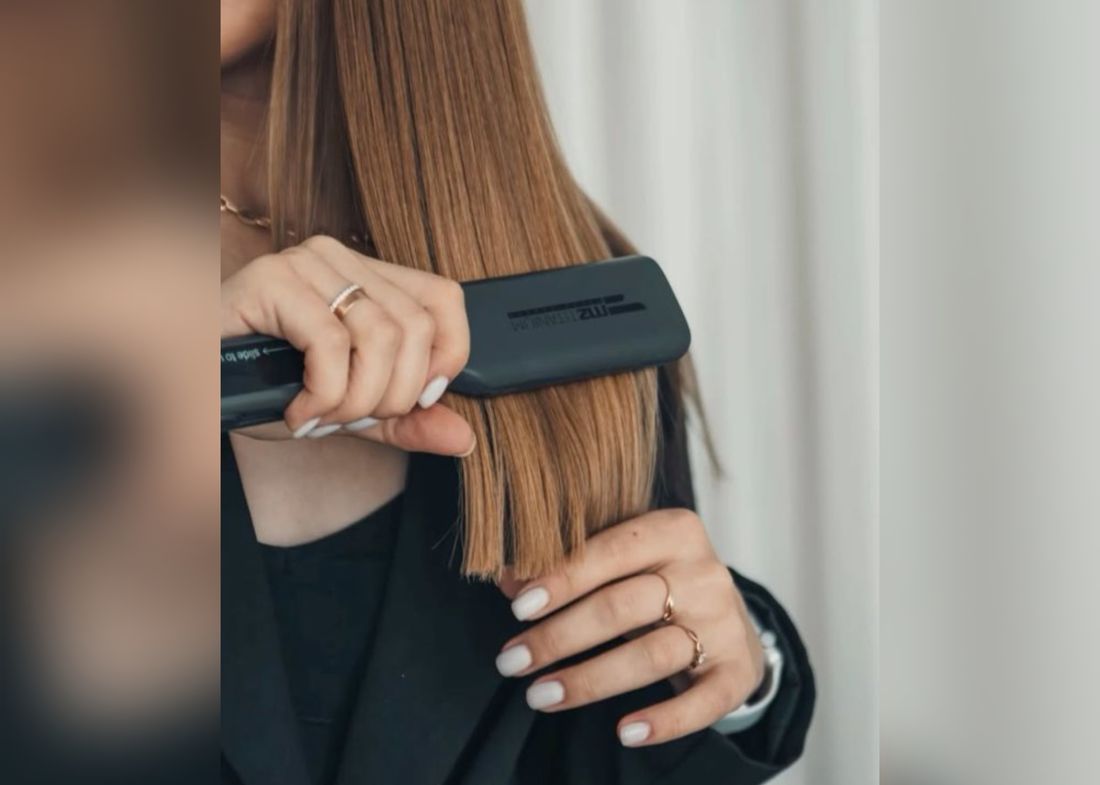
Just a few degrees can be enough to affect the hair's natural structure and cause curly strands to lose their elasticity. While heat-styling tools give hair a smooth, polished appearance, high temperatures and repeatedly running the plates over the same section can cause damage that goes beyond its outward appearance.
200°C… A Temperature Limit Worth Paying Attention To
A study examining the effects of heat on hair highlighted the importance of controlling hair straightener temperatures. Researchers tested seven commercially available devices at temperatures ranging from 185°C to 235°C, using plates of different widths. The experiments involved passing the devices over hair strands repeatedly, up to 300 times, to assess their ability to regain their natural curl pattern after styling and exposure to moisture.
The findings showed that temperatures exceeding 200°C may cause irreversible changes to certain protein structures within the hair cortex. These structures contribute to hair strength, elasticity, and its ability to retain its natural shape. As temperatures rise, the damage becomes more pronounced, and curly strands may lose some of their elasticity and ability to regain their original shape after exposure to moisture.
However, this threshold does not mean that using a straightener at 200°C is safe for all hair types. The study was conducted on Type 3 and Type 4 curly hair under specific experimental conditions. The results also showed that plate width may affect the extent of damage, with changes detected in some tests when wide plates were used at 200°C. Therefore, lowering the temperature remains the best option for reducing potential damage. It is advisable to keep the temperature around 180°C or lower, particularly when using heat-styling tools frequently, while taking your hair's type and condition into account.
How Can You Protect Your Hair From Heat Damage?
The effects of heat-styling tools depend not only on temperature, but also on how many times the plates pass over each section and the condition of the hair before styling. To achieve a polished look while minimizing damage, follow a few simple steps:
Choose the Right Temperature: Avoid turning the heat up to its maximum setting to achieve faster results. Start at a low temperature and gradually increase it if necessary, while avoiding unnecessary exposure to high heat.
Reduce the Number of Passes: Divide your hair into small sections and move the straightener smoothly and steadily rather than repeatedly passing it over the same section. Repeated heat exposure can increase stress on the hair fibers.