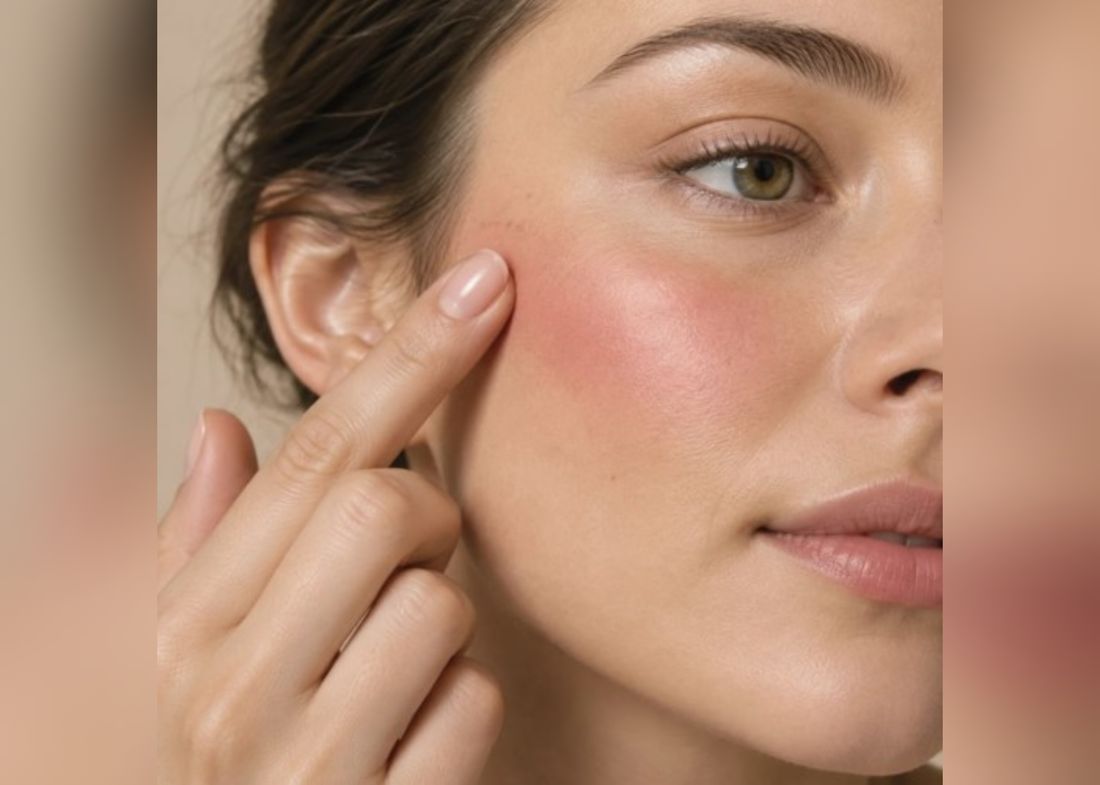
If you sometimes feel that the blush shade you choose does not complement your skin, no matter how beautiful it looks when you try it on, the issue may not always be the shade itself. Instead, it could be your skin’s undertone, which directly affects how makeup colors appear on your face. Since choosing the right shade starts with understanding your skin, makeup experts recommend two simple tests you can do at home to identify your undertone and find a blush that gives your complexion a radiant, harmonious look.
How to Determine Your Skin’s Undertone at Home
Color theory has become one of the most prominent trends in the beauty world, helping many women understand which colors best enhance their features, whether in clothing or makeup.
Test How Gold and Silver Jewelry Look Against Your Skin
The first method involves comparing how gold and silver jewelry look against your skin. What matters here is not which color you prefer or usually wear, but which one makes your face look brighter and more vibrant.
If you notice that silver jewelry enhances your complexion and gives it a brighter appearance, you are likely to have a cool undertone, with pink, red, or blue hues. If gold jewelry looks more harmonious against your skin, you are likely to have a warm undertone, characterized by yellow, golden, or peachy hues.
If both gold and silver look equally flattering on you, your undertone may be neutral, meaning it combines characteristics of both cool and warm undertones. This gives you greater freedom when choosing colors.
Compare Pure White with Creamy White
The second test involves using two pieces of clothing: one in pure white and the other in creamy white. Hold each piece close to your face and observe how its color reflects on your skin in natural light, focusing on your facial features rather than the fabric itself.
If your face looks brighter and more balanced next to pure white, you are likely to have a cool undertone. If creamy white gives you a more vibrant, warmer appearance, this points to a warm undertone. If both shades complement your skin without one overpowering the other, your undertone may be neutral.
Choosing a Blush Shade Based on Your Skin’s Undertone
Once you have identified your skin’s undertone, choosing the right blush becomes easier.
Cool Undertones
Cool undertones are complemented by cool pink, berry, and purple shades. You can also try pink shades with bluish hues for a fresh-looking finish.
Warm Undertones
Apricot, peach, coral, and orange shades enhance warm undertones, adding warmth and vitality to the cheeks.
Neutral Undertones
Neutral undertones offer greater flexibility when choosing colors, as both cool and warm shades can work well, depending on your skin tone and the look you want to achieve.
Pay Attention to Color Intensity and Saturation
Choosing the right blush is not just about finding a suitable color. You should also consider its saturation and pigment intensity. Some complexions look more flattering with soft, subtle colors, while others are enhanced by stronger, more defined shades.
If soft, low-saturation colors suit you better, opt for gentle pink or peach shades and avoid highly pigmented colors that may look too harsh against your features.