The Israeli newspaper The Jerusalem Post revealed an urgent American move to bolster force protection measures for military personnel deployed in the Middle East, after the US Army opened bidding for contracting companies to submit proposals for a project involving the construction of 17 reinforced concrete bunkers to counter the risks of missile and drone attacks.
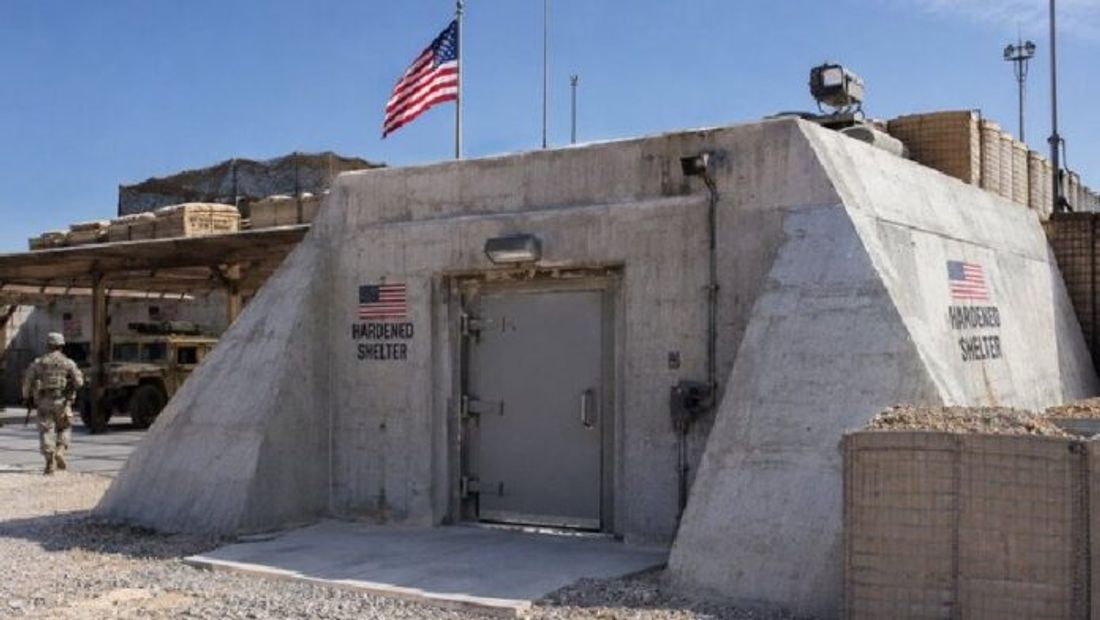
Citing a procurement document, the newspaper explained that the US Army is seeking to construct bunkers capable of withstanding and maintaining their structural integrity against indirect fire attacks—including missile and drone strikes—with the aim of protecting American and allied forces. These bunkers are distributed as follows: ten in the Israeli occupation entity, five in Saudi Arabia, and two in Lebanon.
The urgent nature of the project imposed a tight schedule that gave contracting companies only three days to submit price quotes, followed by a 45-day deadline to complete the work once the executing company is selected.
*The Jerusalem Post* quoted the text of the notice linking this urgency to the reality on the ground: "Due to extreme operational necessity, with soldiers currently facing risks while using non-standard shelters such as converted containers, the subsequent solicitation is expected to include an urgent deadline of no more than three days for submitting price quotes."
The notice detailed the motives behind the project, stating: "Due to elevated regional force protection conditions, there is an urgent, high-priority requirement to replace non-standard personnel protection shelters, such as shipping containers that have been converted into shelters, and provide standardized, precast, reinforced concrete Indirect Fire bunkers."
It added: "The objective is to safeguard US and coalition service members operating in potentially hostile environments across multiple countries within the geographic area of responsibility of US Central Command."
The plan includes allocating ten bunkers to "Israel," to be fully operational and designed for protection against Indirect Fire (IDF) attacks, according to the specifications stated in the notice.
The structures will be built from three reinforced concrete sections, surrounded by barriers designed to absorb blast impacts and reduce fragmentation risks, known as "Alaska Barriers".
The specifications stipulate placing the barriers at a distance of one meter from the entrances and exits of the bunkers, reaching a height of three meters and weighing approximately 6.1 tons per barrier.
Additional fittings include installing protective screens against sniper fire, covering the roofs of the bunkers with a layer of sandbags 18 inches thick (about 46 centimeters), and reinforcing the sides with sandbags up to four feet thick (equivalent to about 1.22 meters).
The document did not specify the names of the military sites where the new facilities will be erected, but clarified that the names and coordinates of the bases will be made available to companies that pass vetting procedures and meet the required conditions upon the issuance of requests for proposals.
The Hebrew newspaper noted an indication suggesting that the bunkers designated for "Israel" will be built inside Air Force bases, via a clause stipulating that "the contractor is not permitted to dispose of any of these materials in the Air Force base's waste collection containers, or at any other site inside the base, without obtaining prior approval."
The instructions impose strict restrictions on the materials that may be used during the execution of the project, banning a group of chemical compounds and elements, including mercury, lead, hexavalent chromium, toluene, asbestos, chlorinated solvents, and polychlorinated biphenyls (PCBs), alongside hydrolyzable chlorine derivatives, ethylene-based glycol ethers, and their acetate derivatives.
The document links these restrictions to the necessity of avoiding any direct or indirect effects that could harm aircraft and their systems, whether in terms of structures, performance, durability, maintenance work, or operational safety.