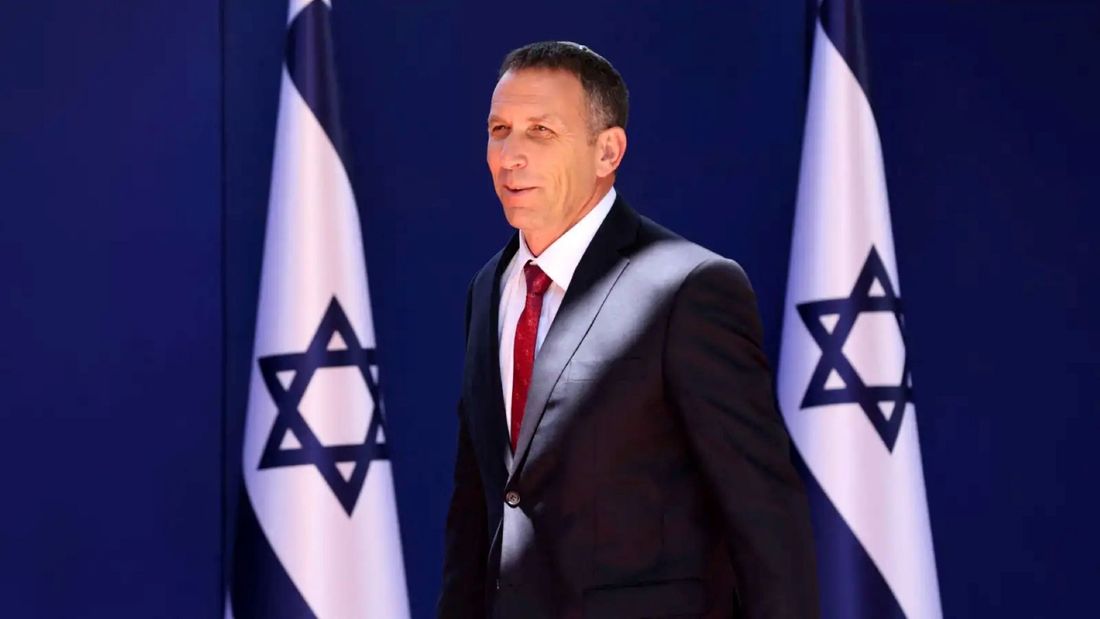
Israeli caretaker Prime Minister Benjamin Netanyahu suffered a new political setback yesterday, Tuesday, after the Knesset elected Matan Kahana—an ally of Gadi Eisenkot, who is tasked with forming the government—as the new Speaker of Parliament, in a move that strengthens the opposition's influence amid stalled government formation negotiations.
Kahana received 66 votes, compared to 52 votes for his rival Ofir Katz, the candidate of Netanyahu's Likud party, in a vote reflecting a shift in the balance of power within the Israeli parliament.
The Likud party had attempted to block the election of a new Knesset Speaker, warning against taking unilateral actions while negotiations to form a national unity government are still ongoing.
The position of Knesset Speaker grants its holder influential powers in managing parliamentary affairs and setting its session agenda, including accelerating the discussion of bills or postponing votes on them.
Kahana's election came after a meeting held by Netanyahu and Eisenkot on Sunday to discuss the possibility of forming a unity government, without achieving tangible progress, as each insisted on his right to assume the premiership.
The dispute between the two sides escalated after Eisenkot deemed Netanyahu unfit to remain in office, following a media report alleging attempts by allies of the prime minister to fabricate fraud charges against lawmakers from the Arab minority.
The legislative elections held on October 27 resulted in neither camp securing the required majority to form a government, which stands at 61 seats out of 120 in the Knesset.
Despite the opposition's success in rallying the necessary votes to elect the Speaker of Parliament, forming a government still faces obstacles, most notably the refusal of Avigdor Lieberman, one of Eisenkot's allies, to rely on the votes of Israeli Arab parties to secure a parliamentary majority.
These developments come as Netanyahu continues to call for the formation of a national unity government, citing security challenges linked to Iran, while urging the US administration to resume the war against Tehran.