At a time when sports stars in the United States prefer to remain silent or tone down their rhetoric, Ferrari driver Lewis Hamilton continues to leverage his fame to shed light on humanitarian and social issues.
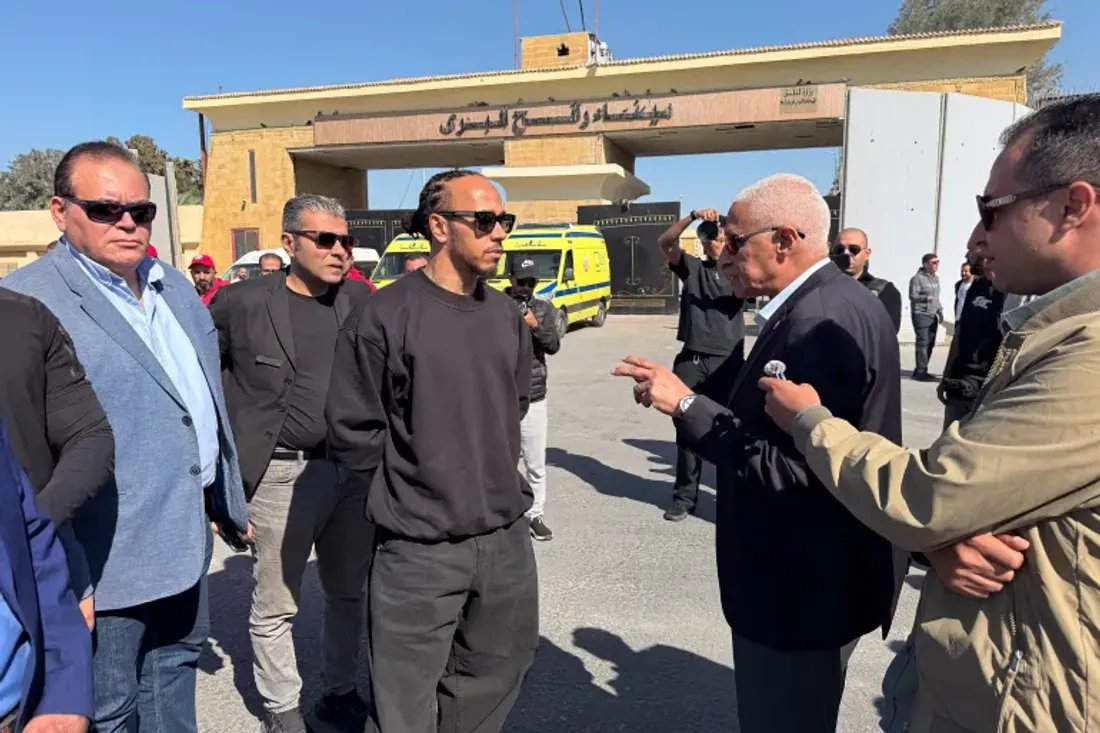
Hamilton stands out as the most prominent athlete practicing protest at a time when American athletes are keeping quiet. While most Formula 1 drivers spend their breaks between races on beaches or golf courses, Hamilton chose to head to the Rafah border crossing between Egypt and the Gaza Strip.
There, he met with aid workers, greeting them in Arabic, and inspected the warehouses of the Egyptian Red Crescent in El-Arish.
His visit, during which he appeared dressed entirely in black, coincided with the martyrdom of at least seven Palestinians due to Israeli airstrikes, bringing the death toll to more than 74,000 victims since the outbreak of the war three years ago.
Hamilton commented via his Instagram account: "The past three years of Israel's genocide in Gaza is appalling".
Speaking of his personal feelings, he added: "I know so many people that feel that same helplessness. That same need to do something rather than just watch. I don't want us to get used to their suffering. I don't want us to look away".
This clear stance places the seven-time world champion—and the only Black driver in Formula 1 history—in an exceptional position compared to American stars whose political activism has receded during US President Donald Trump's second term, such as LeBron James.
With the championship returning to America this week for the Las Vegas Grand Prix, Hamilton emerges as sports' foremost ambassador defending just causes, capitalizing on his broad presence in American circles—ranging from his co-ownership of the Denver Broncos to his appearances at major events.
His stance was not born of the moment; during the 2020 and 2021 seasons, Hamilton led anti-racism protests on race circuits with the support of former world champion Sebastian Vettel. He also engaged in public exchanges with Trump in defense of athletes' freedom of expression, and inspired other drivers such as Bubba Wallace in NASCAR to break its stagnation regarding racial inequality.
In practical terms, Hamilton translated his principles into tangible steps: after establishing the "Hamilton Commission" in 2020 to diagnose the underrepresentation of Black people in motorsport (less than 1%), he launched the "Mission 44" initiative with personal funding of £20 million to support young people from underrepresented groups.
By 2026, these efforts bore fruit with seven graduates of the initiative joining the motorsport workforce, including five within Formula 1 itself.ذ