In a dangerous escalation adding to the ongoing record of violations, the Israeli army has introduced a new destructive tactic in the Gaza Strip, using large quadcopter drones to drop boxes and cubes packed with large quantities of explosives onto the rooftops of homes and residential buildings before detonating them remotely.
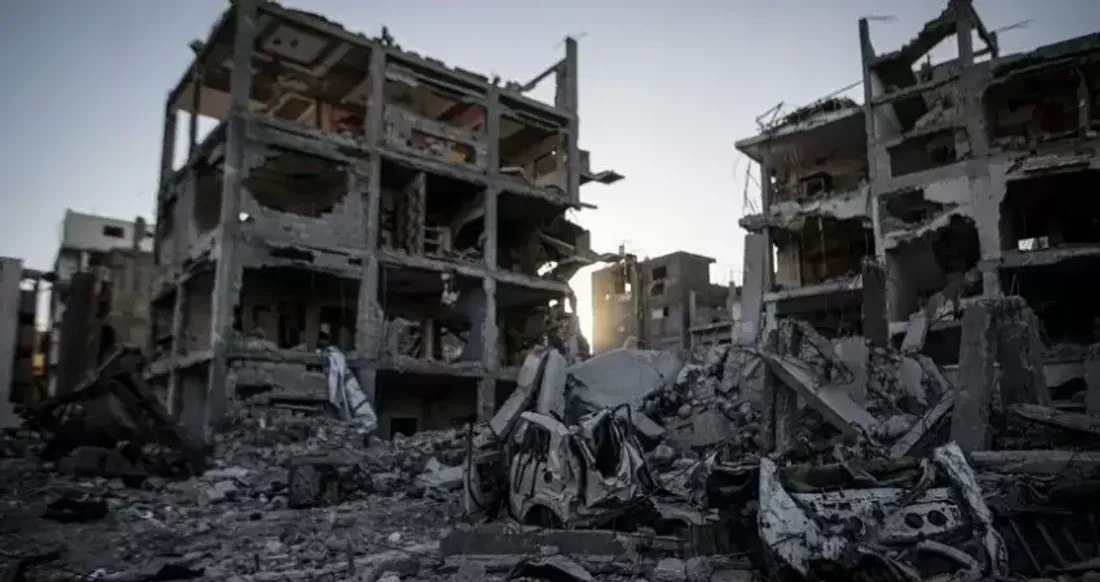
These systematic attacks are turning the remaining residential neighborhoods in the eastern areas of the Gaza Strip into scattered rubble. The drones repeatedly target the same residential blocks, dropping multiple explosive devices in succession, causing massive explosions that wipe out residents' homes and destroy essential infrastructure without the need for ground military incursions.
This military tactic is imposing a tragic reality of constant fear and forced displacement on thousands of displaced families and residents living near what is known as the "Yellow Line." Civilians find themselves facing sudden death falling from the sky without warning, while civil defense and explosive ordnance disposal teams are unable to reach the area to remove these extremely dangerous objects.
These practices come as part of what is described as Israel's scorched-earth policy, aimed at emptying the eastern areas of Gaza City and central Gaza of their residents and turning them into devastated, uninhabitable zones, in disregard of international conventions and ongoing ceasefire agreements.
"Explosive Boxes" and How They Work
Explosive boxes and cubes are among the latest weapons introduced by Israeli forces into the battlefield in the Gaza Strip in mid-November 2026. They consist of metal or plastic containers and barrels packed with several kilograms of highly explosive materials, such as C4, and transported through heavy-lift quadcopter drones.
The system operates by having the drone fly at low altitude over the rooftops of residential buildings or displacement tents and accurately drop its payload. The explosives are then detonated remotely within minutes or left as booby traps designed to explode upon contact. This generates a destructive blast wave comparable in force to a direct aerial bombardment, capable of demolishing entire residential blocks.
Testimonies from Residents
Abdel Jawad Badwan, a resident of the eastern areas of the Zeitoun neighborhood, southeast of Gaza City, recounted the terrifying moments his family experienced. He said they were sitting inside their home near the "Yellow Line," preparing to eat lunch in an atmosphere of cautious calm, when they were suddenly startled by the buzzing of a large quadcopter drone flying overhead while carrying frightening box-shaped objects.
Badwan said the drone dropped several explosive devices onto the rooftops of neighboring houses. It did not stop there, but repeatedly returned every few minutes to drop more boxes, turning the residential block, which housed dozens of families, into a mass of flames and thick dust as successive explosions shook the neighborhood.
He confirmed that he was forced to flee through a barrage of shrapnel with his wife, children, and elderly father toward the street. They found themselves forced to spend the night outdoors after their home had been completely destroyed. He stressed that life in eastern Zeitoun had become a daily gamble, with death lurking around every corner and no alternative shelter available.
In the Bureij refugee camp in central Gaza, Mahmoud Abu Odeh, a resident of the northeastern areas of the camp, described the widespread panic among residents following an attack near the Abu Odeh olive press, where Israeli drones dropped three explosive boxes.
He explained that the powerful explosions blew doors and windows off their hinges and caused extensive damage to homes occupied by residents and displaced families.
Abu Odeh said this new tactic had instilled unprecedented fear among women and children. Residents no longer feel safe under the roofs of their homes or inside their tents, as drones that were previously used mainly for surveillance or shooting have now become carriers of explosive death, hovering over their heads around the clock.
The Palestinian resident stressed that families in the Bureij camp are caught between two impossible choices: remaining at the mercy of explosive boxes that suddenly fall from the sky, or being forcibly displaced once again into the unknown, amid severe overcrowding and a lack of tents and safe spaces in the western and southern parts of the Gaza Strip.