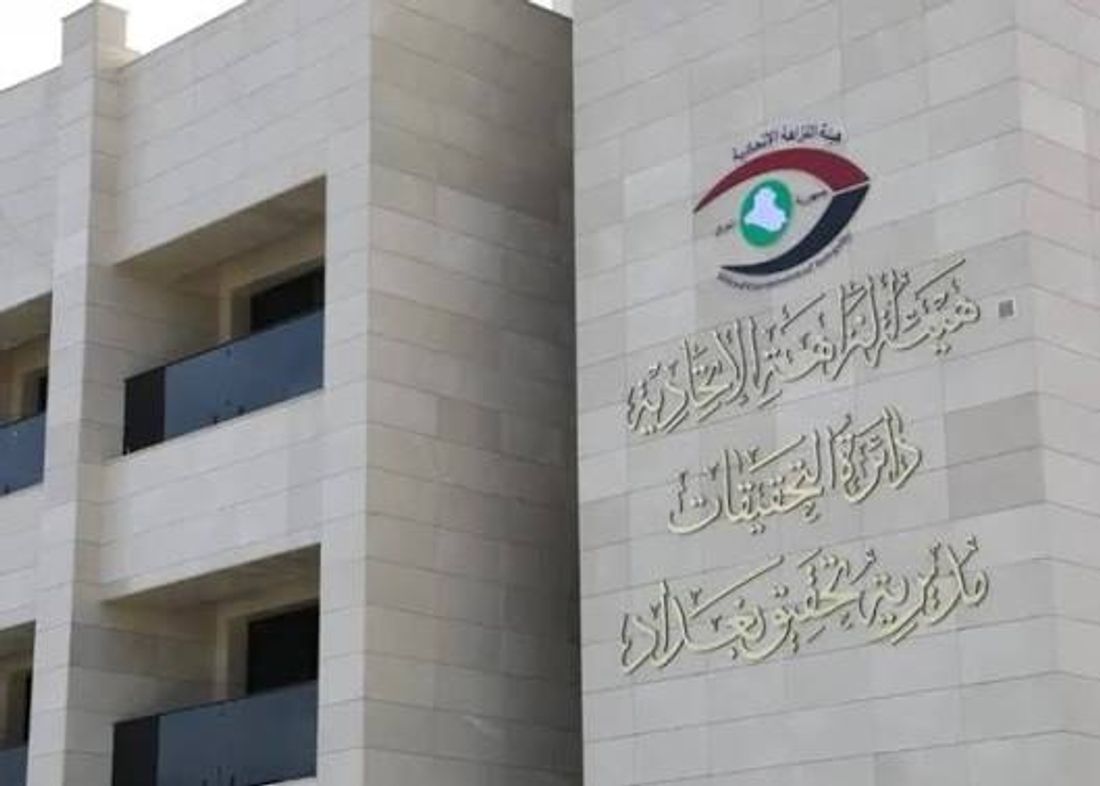
The Federal Commission of Integrity announced the issuance of the final report of the United Nations review of Iraq’s implementation of the provisions of the United Nations Convention against Corruption (UNCAC), confirming the documentation of several successful Iraqi experiences and practices in the fields of corruption prevention and asset recovery, in addition to highlighting the Commission's role in promoting transparency and protecting public funds.
In a statement received, the Commission said that "the final report has been issued containing a comprehensive summary of the status of the Republic of Iraq's implementation of the provisions of Chapters II and V of the United Nations Convention against Corruption, relating to preventive measures and asset recovery, confirming the documentation of a number of successful national practices and legislative and institutional measures taken to enhance integrity, transparency, and the protection of public funds."
It noted that "the UN report reviewed its role in implementing the National Anti-Corruption Strategy for the years (2021–2024) and preparing for the subsequent strategy (2026–2030), alongside its mandates in preventing and combating corruption, investigating corruption offenses, reviewing financial disclosure statements, detecting cases of illicit enrichment, and strengthening partnerships with state institutions, the private sector, and civil society organizations."
The Commission added that "the two reviewing states included four Iraqi practices among the successful experiences in the field of preventive measures, represented by introducing a Higher Diploma program at the Iraqi Anti-Corruption Academy, launching the Transparency and Protection of Public Funds Program, conducting a public sector bribery perception survey, as well as dedicating a hotline to receive reports on illicit enrichment—reflecting the diversity of mechanisms adopted to enhance corruption prevention and detection."
It pointed out that "the report highlighted the measures taken to regulate government procurement and contracts, strengthen oversight over public spending, prevent conflicts of interest, ensure financial asset disclosure, and protect whistleblowers, in addition to the role of the Iraqi Anti-Corruption Academy in building employee capacities, developing their oversight skills, and spreading a culture of integrity and transparency within government institutions and society."
In the area of asset recovery, the Commission explained that "the UN review highlighted Iraq’s procedures in international judicial cooperation and mutual legal assistance, the role of the Asset Recovery Department and the Iraq Fund for Asset Recovery, and included the International Cooperation Procedures Manual among good practices."
It pointed to "the success of several recovery requests submitted by Iraq and the filing of civil lawsuits to recover financial assets abroad," commending "the role of the Supreme Judicial Council in supervising the investigation of corruption files and issuing judicial rulings against those convicted in corruption cases, in addition to its role in managing mutual legal assistance requests within the framework of international judicial cooperation, thereby supporting legal procedures related to prosecuting corruption crimes and recovering assets."
The statement continued that "the report addressed efforts to combat money laundering and terrorism financing, procedures for identifying the beneficial owner, strengthening oversight over financial transactions, and exchanging information with international bodies."
It noted "the adoption of the (goAML) system to receive suspicious transaction reports linking all reporting entities, as well as the measures taken to detect the movement of funds and trace proceeds arising from crimes."
The Commission noted that "the two reviewing states identified a set of challenges and recommendations, most notably completing legislation related to asset recovery, confiscation, and international legal cooperation; strengthening verification mechanisms for financial disclosures and assets outside Iraq; developing public procurement procedures and conflict-of-interest disclosures; as well as completing digital transformation and facilitating information exchange between national authorities and their foreign counterparts."
The statement indicated that "the results of the UN review represent a reference point for evaluating the progress achieved in implementing the provisions of the Convention, building upon successful national practices, and following up on the implementation of recommendations in coordination with the relevant authorities to enhance the effectiveness of the anti-corruption system, protect public funds, and develop mechanisms for recovering smuggled funds and assets